Tongkat Ali and Ashwagandha Explained: The Two Stress Herbs in IronPulseX
Quick answerTongkat Ali and ashwagandha are roots studied for stress. 200 mg a day of Tongkat Ali for 4 weeks lowered cortisol by 16% in stressed adults. Ashwagandha at 300 mg twice a day cut stress scores by 44% over 60 days. IronPulseX includes both, but the amounts per gummy are not published, so its dose cannot be compared with these trials.
What are Tongkat Ali and ashwagandha?
Both are roots with a long history in traditional medicine. Both are now sold for stress and male vitality. They come from very different plants, though.
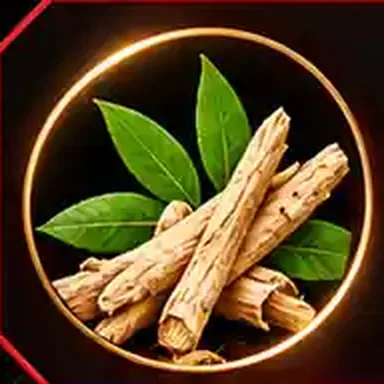
Tongkat Ali (Eurycoma longifolia) is a tree root from Malaysia and Indonesia. It is also called longjack. Most research looks at its effect on stress hormones and testosterone.
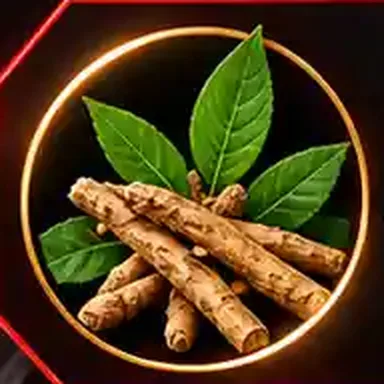
Ashwagandha (Withania somnifera) is a shrub root from India, used in Ayurveda for centuries. It is known as an adaptogen, a herb said to help the body handle stress.
IronPulseX lists both among its six botanicals. The full list is on the ingredients page.
How do Tongkat Ali and ashwagandha compare?
The two herbs overlap on stress, but their research points in different directions. Here is how they line up.
| Feature | Tongkat Ali | Ashwagandha |
|---|---|---|
| Plant part | Root of a tropical tree | Root of a small shrub |
| Traditional use | Malay and Indonesian folk medicine | Ayurvedic medicine |
| Main research focus | Cortisol, testosterone, sexual well-being | Perceived stress, cortisol, sleep |
| Key stress result | Cortisol down 16% (Talbott et al., 2013) | Stress scores down 44% (Chandrasekhar et al., 2012) |
| Common study dose | 200-300 mg extract a day | 225-600 mg root extract a day |
| Main caution | Few side effects in trials | Rare liver injury, thyroid effects |
| Amount in IronPulseX | Not published | Not published |
What does research say about Tongkat Ali?
Tongkat Ali has a small but steady body of human trials. Most are short, and each uses a specific extract.
Stress hormones and mood
In 63 moderately stressed adults, 200 mg a day of a standardized root extract for 4 weeks lowered cortisol by 16%. Testosterone status rose by 37% (Talbott et al., 2013).
Testosterone across several trials
A review pooled 5 trials with 232 men taking 100-600 mg a day. Total testosterone rose, and the rise was largest in men who started with low levels. Side effects were minimal (Leisegang et al., 2022).
Sexual well-being
In a 12-week trial, 109 men aged 30 to 55 took 300 mg a day of a freeze-dried extract. Their erectile function score and sexual interest improved compared with placebo (Ismail et al., 2012). That is one trial, in healthy men, with one specific extract.
What does research say about ashwagandha?
Ashwagandha research is larger and centers on stress. Its effect on male hormones is less clear.
Stress and cortisol
In 64 stressed adults, 300 mg of a root extract twice a day for 60 days cut perceived stress scores by 44%. Cortisol fell by 28% (Chandrasekhar et al., 2012).
Hormones in older men
In 43 overweight men aged 40 to 70, an ashwagandha extract raised DHEA-S and testosterone compared with placebo. Fatigue, vigor and sexual well-being did not differ (Lopresti et al., 2019). So a change on a lab test did not show up as a change men could feel.
Typical doses
The NIH Office of Dietary Supplements notes that trials usually use 225-600 mg a day (NIH ODS, Ashwagandha). Extracts vary in strength, so the extract type matters as much as the milligrams.
Two stress herbs in one daily gummy
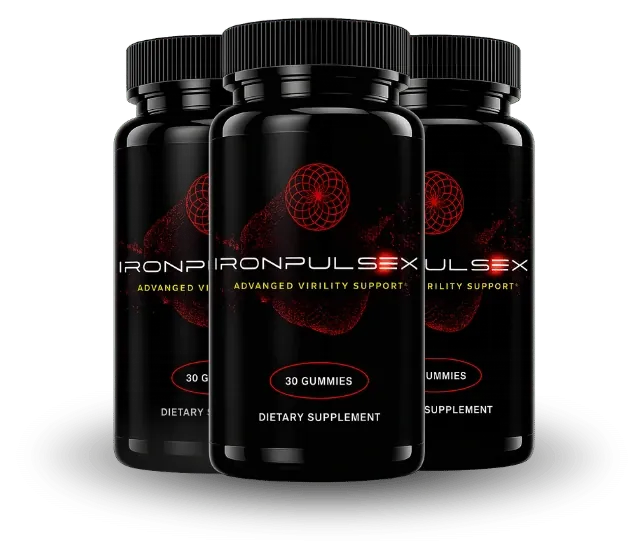
IronPulseX pairs Tongkat Ali and ashwagandha with four more botanicals in a chewable gummy. Sold by the U.S. stocking partner with a 60-day money-back guarantee.
Why does IronPulseX pair a stress herb with Tongkat Ali?
Stress and drive are linked, which is the logic behind pairing these two herbs. A mind under pressure finds it harder to relax, and constant worry about sex can feed on itself.
The IronPulseX sales page describes the formula this way: "Adaptogen blend reduces stress-related performance anxiety." In plain terms, it means the stress herbs are there to support a calmer response to everyday pressure. The trials above measured stress and cortisol. They did not test IronPulseX, and they did not test performance anxiety as a condition.
A supplement also cannot treat erectile dysfunction. ED is a medical condition, and it can be an early warning sign of heart disease (Vlachopoulos et al., 2013). Hardened arteries, high blood pressure and diabetes are common causes (NIDDK, causes of ED). If erection problems last, see a doctor before trying any herb.
IronPulseX also includes beet root, a source of dietary nitrate linked to blood-vessel function. That side of the formula is covered in beet root, nitric oxide and blood flow.
How do the IronPulseX amounts compare with the studies?
This is the honest gap. IronPulseX names both herbs, but the amount of each per gummy is not published in the files we have. The serving size is not published either.
So nobody can say whether a serving of IronPulseX comes close to the 200 mg of Tongkat Ali or the 600 mg a day of ashwagandha used in the trials above. A chewable gummy also holds far less material than a large capsule, especially with six botanicals sharing the space.
Read the Supplement Facts panel on your bottle before your first gummy. The Supplement Facts page explains what to look for, and our buyer's checklist shows how to score any label.
How long did the Tongkat Ali and ashwagandha trials last?
The trials behind these herbs ran for weeks, not days. None of them looked for a same-day effect, and a botanical that promises one deserves suspicion.
Herbs like these are thought to work gradually, if they work for you at all. That is why daily use over several weeks matters more than any single dose. It also means a fair trial of any stress herb takes patience.
- 4 weeks
Tongkat Ali at 200 mg a day lowered cortisol in stressed adults (Talbott et al., 2013).
- 60 days
Ashwagandha at 300 mg twice a day cut stress scores and cortisol (Chandrasekhar et al., 2012).
- 12 weeks
Tongkat Ali at 300 mg a day improved sexual interest scores in men aged 30 to 55 (Ismail et al., 2012).
- 60 days
The IronPulseX refund window, counted from purchase. Plan your trial to end with time left to call.
Buyers in the retailer's review pack most often mention waiting 4 to 8 weeks. Those reviews were supplied by the retailer and are not independently verified. The results timeline page sets out realistic expectations.
Who should be careful with Tongkat Ali and ashwagandha?
Both herbs are well tolerated by most healthy adults in short trials. Still, a few groups should talk to a doctor first.
Liver concerns
Ashwagandha is a likely cause of rare liver injury, usually 2 to 12 weeks after starting (NIH LiverTox, Ashwagandha).
Thyroid conditions
Ashwagandha may affect thyroid hormone levels. Ask first if you take thyroid medicine (NIH ODS, Ashwagandha).
Hormone-sensitive cancer
Men with hormone-sensitive prostate cancer should avoid ashwagandha unless a doctor agrees (NIH ODS, Ashwagandha).
Other medicines
Sedatives, immunosuppressants and blood pressure drugs may interact. Bring the bottle to your doctor.
Stop and call a doctor if you notice yellow eyes, dark urine or itching. The side effects page covers the rest of the formula.
What else helps with stress and drive?
Herbs are a small lever next to daily habits. The steps below lower stress for most men, with or without a supplement.
Protect your sleep
Aim for 7 or more hours, with a steady bedtime and no phone in the last half hour.
Move most days
A brisk walk or a workout lowers tension and supports heart health.
Drink less
Alcohol eases nerves for an hour but breaks up deep sleep.
Talk it through
Honest talk with a partner, or a counselor, helps when worry about sex keeps returning.
Our male vitality guide covers each habit in more depth. If you shop for herbal products, read how to spot risky male enhancement supplements first.
Tongkat Ali and ashwagandha FAQ
Is Tongkat Ali the same as ashwagandha?
No. Tongkat Ali is the root of a Southeast Asian tree, Eurycoma longifolia. Ashwagandha is the root of Withania somnifera, a shrub used in Ayurveda.
Does Tongkat Ali raise testosterone?
A pooled look at 5 trials in 232 men found a rise in total testosterone at 100-600 mg a day, mostly in men whose levels were low to begin with.
How much ashwagandha is used in studies?
Trials usually use 225-600 mg of root extract a day. One well-known stress trial used 300 mg twice a day for 60 days.
Can ashwagandha harm the liver?
Rarely. NIH LiverTox rates it a likely cause of rare liver injury, usually 2 to 12 weeks after starting. Stop and see a doctor if you notice dark urine, yellow eyes or itching.
How much Tongkat Ali is in IronPulseX?
The amount is not published. Read the Supplement Facts panel on your bottle, or call +1 (720) 619-8477 if it is unclear.
Can these herbs fix erection problems?
No supplement can treat erectile dysfunction, which is a medical condition. Stress herbs may help with stress, but lasting erection problems need a doctor.
How long do the trials last?
Tongkat Ali trials ran from 4 to 12 weeks. The main ashwagandha stress trial ran 60 days.