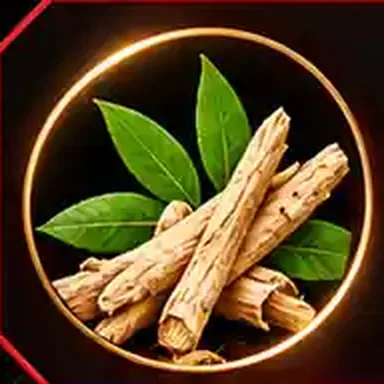
Tongkat Ali
Eurycoma longifolia (root)
A Southeast Asian root, also called longjack. It is the most-studied herb for men's testosterone and stress hormones.
Quick answerIronPulseX contains six botanicals in a chewable gummy.
They are Tongkat Ali, Ashwagandha, Maca Root, Horny Goat Weed, Beet Root and Grape Seed Extract, with 30 gummies in each bottle. The amount per gummy is not published, so check your bottle's label.
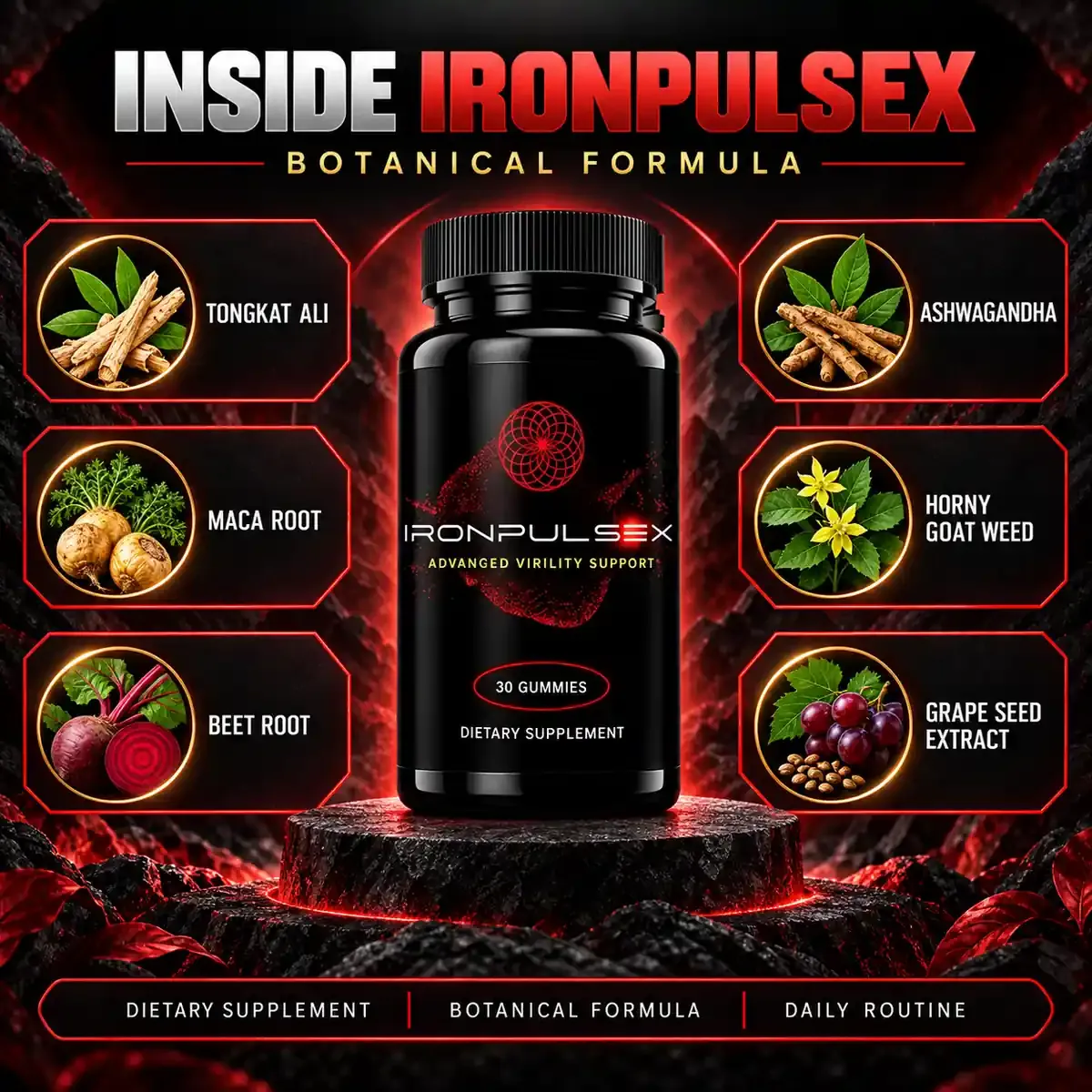
IronPulseX names six botanicals on its pack. They are Tongkat Ali, Ashwagandha, Maca Root, Horny Goat Weed, Beet Root and Grape Seed Extract. All six come from roots, leaves or seeds.
Each one arrives in a chewable gummy, and a bottle holds 30 gummies. The amount of each botanical per gummy has not been published. So this page shows what each plant is, what studies used, and what they found.
Eurycoma longifolia (root)
A Southeast Asian root, also called longjack. It is the most-studied herb for men's testosterone and stress hormones.

Withania somnifera (root)
An Ayurvedic adaptogen. Human trials link it to lower perceived stress and cortisol, and some show small testosterone changes.

Lepidium meyenii (root)
A Peruvian root vegetable. One well-known trial found better sexual desire in healthy men at 1.5 to 3 grams a day.
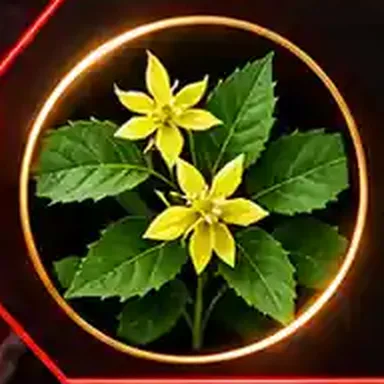
Epimedium (leaf)
A traditional Chinese herb. Its compound icariin acts on blood-vessel enzymes in the lab, but human data are thin.

Beta vulgaris (root)
A natural source of dietary nitrate, which the body turns into nitric oxide, a molecule that relaxes blood vessels.
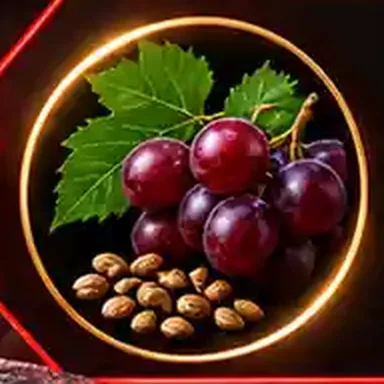
Vitis vinifera (seed)
A source of polyphenols called proanthocyanidins. Some trials show small blood pressure effects.
The six plants fall into three natural pairs. Each pair lines up with one area the formula is made to support.
The stress pair works on hormones. The circulation pair works on blood vessels. The desire pair targets interest and drive. The full chain is laid out on how IronPulseX works.
Tongkat Ali and ashwagandha. Both roots have human trials that measured stress hormones such as cortisol.
Beet root and grape seed. Both are studied for blood pressure and the way blood vessels relax.
Maca and horny goat weed. Maca has a desire trial in healthy men. Horny goat weed rests mostly on lab work.
Tongkat Ali is a root from Southeast Asia, also called longjack. Its Latin name is Eurycoma longifolia. It has more men's health trials than any other plant in IronPulseX.
In 63 moderately stressed adults, 200 mg a day of a standard root extract for 4 weeks cut cortisol by 16% (Talbott et al., 2013). Testosterone status rose 37% in the same study. A later review pooled 5 trials in 232 men using 100 to 600 mg a day. Total testosterone went up, most in men who started low, and side effects were minimal (Leisegang et al., 2022).
A third trial gave 109 men aged 30 to 55 a dose of 300 mg a day for 12 weeks. Their erectile function scores and sexual interest improved more than placebo (Ismail et al., 2012). Our post on Tongkat Ali and ashwagandha goes deeper.
Ashwagandha is an Ayurvedic root, Withania somnifera. It is the classic adaptogen, a herb said to help the body handle stress. Most human research looks at stress, sleep and mood.
In 64 stressed adults, 300 mg twice a day for 60 days lowered perceived stress scores by 44% and cortisol by 28% (Chandrasekhar et al., 2012). Trials usually use 225 to 600 mg a day (NIH ODS, Ashwagandha).
Results on male vitality are mixed. In 43 men aged 40 to 70, an extract raised DHEA-S and testosterone compared with placebo. Yet fatigue, vigor and sexual well-being did not differ (Lopresti et al., 2019). Ashwagandha has rare reports of liver injury, usually 2 to 12 weeks after starting (NIH LiverTox, Ashwagandha).
Maca is a root vegetable grown high in the Peruvian Andes. Its Latin name is Lepidium meyenii. People there have eaten it as food for centuries.
The trial cited most often gave healthy men 1.5 or 3 grams a day for 12 weeks. Sexual desire improved from week 8, and testosterone did not change (Gonzales et al., 2002). So maca seems to work on interest, not on hormones.
The wider evidence is thin. A review of four small trials found mixed results and called the evidence limited (Shin et al., 2010). Maca is still a sensible pick for the desire side of the formula.
Horny goat weed is the leaf of Epimedium, a plant used in traditional Chinese medicine. Its best-known compound is icariin. Most of what we know comes from lab work.
In the lab, icariin mildly blocks PDE-5, the same enzyme that ED drugs block (MSKCC, Epimedium). That effect has not been shown in good human trials. The U.S. military's supplement safety program notes a lack of human research for sexual-health claims (OPSS, Horny Goat Weed).
Products usually contain 250 to 500 mg once a day, and liver injury looks unlikely (NIH LiverTox, Horny Goat Weed). Case reports describe fast heart rhythm, though, so people with heart disease should be careful (MSKCC, Epimedium).
Beet root is a natural source of dietary nitrate. The body turns nitrate into nitrite and then into nitric oxide. Nitric oxide is a molecule that relaxes the walls of blood vessels (Lundberg et al., 2008).
Across 16 short trials, nitrate or beetroot juice lowered systolic blood pressure by about 4.4 mmHg, and higher doses did more (Siervo et al., 2013). In 68 adults with high blood pressure, 250 mL of beetroot juice a day for 4 weeks lowered clinic readings by 7.7/2.4 mmHg (Kapil et al., 2015).
Those studies used juice, measured in cups. A gummy is small, so the nitrate it can carry is limited. The story is told in full in beet root, nitric oxide and blood flow.
Grape seed extract comes from the seeds of wine grapes, Vitis vinifera. It is rich in polyphenols called proanthocyanidins. These plant compounds are studied for heart and blood-vessel health.
A review of 9 trials found grape seed extract lowered systolic blood pressure by 1.5 mmHg and heart rate by a little (Feringa et al., 2011). In 80 adults with mildly high readings, 300 mg a day for 16 weeks lowered blood pressure in men, but not in the group overall (Schön et al., 2021).
These are small shifts. They fit the formula as a gentle partner to beet root, not as a main driver.
| Ingredient | Part used | What it is known for | Studied dose | Amount in IronPulseX |
|---|---|---|---|---|
| Tongkat Ali | Root | Stress hormones and testosterone status in men | 100-600 mg extract a day | Not published |
| Ashwagandha | Root | Perceived stress and cortisol | 225-600 mg root extract a day | Not published |
| Maca Root | Root (hypocotyl) | Sexual desire in healthy men | 1,500-3,000 mg a day | Not published |
| Horny Goat Weed | Leaf | Icariin, a lab-studied PDE-5 compound | No human-tested dose (products use 250-500 mg) | Not published |
| Beet Root | Root | Dietary nitrate for blood-vessel function | About 250 mL of juice a day | Not published |
| Grape Seed Extract | Seed | Polyphenols and small blood pressure effects | About 300 mg a day | Not published |
Every gummy has a base that holds its shape. That base is usually gelatin or pectin, plus sweeteners, flavors and colors. For IronPulseX, none of these have been published.
That matters if you avoid animal products, track sugar or have a food allergy. The IronPulseX Supplement Facts page lists what to look for when your bottle arrives.
Check the bottle first
Read the Supplement Facts panel and the other-ingredients line before your first gummy. If anything is unclear, call the order desk at +1 (720) 619-8477 with the lot number from the bottle.
Nobody can compare IronPulseX with the studies yet, because the amounts are not published. The table shows each studied dose next to a blank label column.
The studied doses add up to several grams a day. That is a lot to fit in a small chewable gummy. A smaller dose does not prove the formula fails, but it is not the dose that was tested.
| Ingredient | IronPulseX (per serving) | Doses used in studies | Gap | Source |
|---|---|---|---|---|
| Tongkat Ali | Not published | 100-600 mg extract a day (200-300 mg common) | Cannot compare | (Leisegang et al., 2022) |
| Ashwagandha | Not published | 225-600 mg root extract a day | Cannot compare | (NIH ODS, Ashwagandha) |
| Maca Root | Not published | 1,500-3,000 mg a day | Cannot compare | (Gonzales et al., 2002) |
| Horny Goat Weed | Not published | No human-tested dose; products use 250-500 mg | Cannot compare | (NIH LiverTox, Horny Goat Weed) |
| Beet Root | Not published | About 250 mL beetroot juice a day (nitrate) | Cannot compare | (Kapil et al., 2015) |
| Grape Seed Extract | Not published | About 300 mg a day | Cannot compare | (Schön et al., 2021) |
If a label amount matters to you, check it against this table when your bottle arrives. Safety notes for each plant are on IronPulseX side effects.
The brand names six botanicals: Tongkat Ali (Eurycoma longifolia), Ashwagandha, Maca Root, Horny Goat Weed (Epimedium), Beet Root and Grape Seed Extract.
That amount is not published in the files we have. Trials used 100 to 600 mg of extract a day, so check the Supplement Facts panel on your bottle.
The gummy base is not published. Many gummies use gelatin, so read the label if you avoid animal products.
The sugar content has not been published. Most gummies contain some sweetener, so check the label if you track sugar or have diabetes.
None of the six named botanicals is a stimulant. The full other-ingredients list is not published, so the label on your bottle is the final word.
Beet root is a natural source of dietary nitrate. The body turns nitrate into nitric oxide, a molecule that helps blood vessels relax.
Liver injury looks unlikely based on NIH LiverTox, but case reports describe fast heart rhythm. People with heart disease should ask a doctor first.
A daily chewable gummy with six named botanicals, sold by the U.S. stocking partner with a 60-day money-back guarantee. Questions first? Call +1 (720) 619-8477, 7 days a week.